On Thursday, September 4, 2025, Currys PLC stunned investors with a £50 million share buyback — its first in over a decade — as shares rocketed 19% to 130.08 pence in early London trading. The move came alongside a stronger-than-expected trading update, the completion of a landmark pension review, and confirmation that the company is on track to return £75 million to shareholders this year. It’s not just a cash giveaway; it’s a signal that Currys PLC has turned a corner after years of cost pressures and market uncertainty.
Why Investors Are Celebrating
The market reaction was immediate and violent. By 8:25 a.m. London time, Currys shares had jumped 24%, adding to a nearly 50% gain over the past six months. The trigger? A combination of solid sales, disciplined cost control, and a pension deal that freed up cash without risking future obligations. The company confirmed it had already bought back 944,622 shares — worth roughly £12 million — before the official announcement. That reduces the total shares in circulation to 1,117,356,471, boosting earnings per share even before the full £50 million is spent. The buyback, authorized at the Annual General Meeting on the same day, will be executed by Panmure Liberum and must conclude by April 30, 2026. But the real headline isn’t just the buyback — it’s the pension review. Currys has completed its triennial review and now expects its pension scheme to be fully funded on a very prudent basis by 2030/31. That means lower future contributions. Wayne Brown, an analyst at Panmure Liberum, called it “not only earlier than expected, but on much better terms than we had been expecting.”Strong Sales Across Key Categories
Revenue in the UK & Ireland rose 3% for the 17 weeks ended August 30, 2025. That might sound modest, but it’s a sharp turnaround from recent declines. What’s driving it? Gaming consoles, AI-powered computing gear, large appliances like refrigerators and washing machines, coffee machines, and cooling products. Sales of TVs and tablets dipped, but those losses were more than offset. In the Nordics, where Currys operates under the Elkjøp brand, revenue grew 2% year-on-year — and the company says its recovery there is “picking up pace.” Even more impressive is the growth in recurring services. iD Mobile, Currys’ mobile virtual network operator, hit 2.3 million subscribers — up 22% from last year. The company is now targeting 2.5 million by year-end. That’s not just a revenue stream; it’s a sticky customer relationship that locks people into Currys’ ecosystem. And it’s profitable. The company didn’t break out iD’s margins, but analysts say it’s one of the most valuable parts of the business.
Financial Turnaround in Black and White
For the financial year ending March 5, 2025, Currys reported £8.7 billion in revenue — up 3% from £8.48 billion the prior year. But the real story is in the profit: £162 million in adjusted profit before tax, a staggering 37% jump from just £28 million the year before. That’s not inflation. That’s operational excellence. Costs were tightly controlled, and the company is now guiding for £170 million in adjusted pretax profit for 2025/26 — a 3.1% increase. Net cash at year-end is expected to be at least £100 million, even after the £75 million in shareholder returns and pension contributions. The company’s capital expenditure remains disciplined — under £100 million annually — and it’s targeting at least a 3% adjusted EBIT margin in both the UK&I and Nordics regions. That’s not flashy, but it’s sustainable. And for a retail chain that runs 708 physical stores across the UK, Ireland, and Scandinavia, that kind of efficiency is rare.Leadership and Strategy: A Shift in Tone
Alex Baldock, Currys’ Group Chief Executive, didn’t just announce numbers — he changed the narrative. “It’s been a good start to the year,” he said. “We’re working to deliver an ever-improving experience for colleagues, for customers and for shareholders.” That last phrase — “for shareholders” — is new. For years, Currys was seen as a company focused on survival. Now, it’s talking about rewards. The dividend — £25 million — is back, and it’s structured to grow. The board has committed to paying dividends at a level representing around five times adjusted earnings per share. And here’s the kicker: if shareholder returns exceed £80 million in a year, the company will make extra pension contributions. That’s a rare show of alignment between management and pensioners. It’s not just about stock prices. It’s about trust.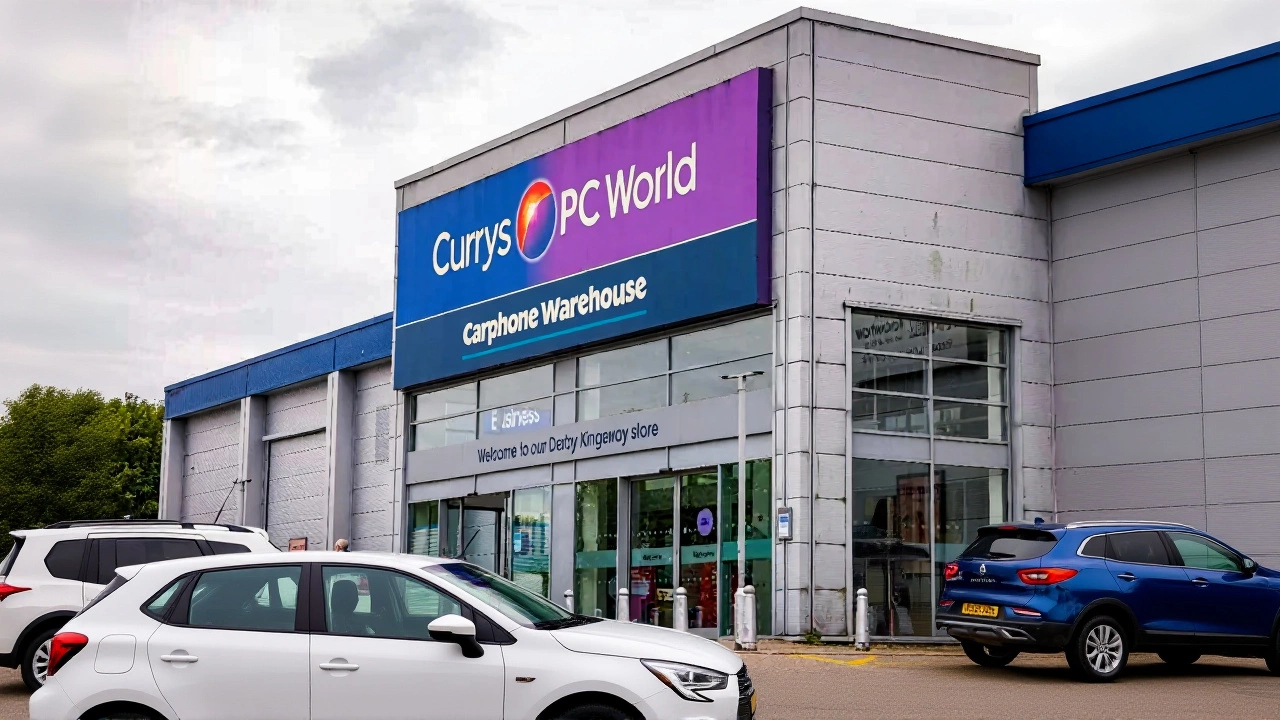
What’s Next? The Road to December
Currys will release its interim results for the 26 weeks ending November 1, 2025, on December 18, 2025. That’s the next big moment. Will iD Mobile keep growing? Will the Nordics continue to recover? And will the buyback program stay on track? Analysts are split. The consensus rating is “Hold,” with a £150 price target — suggesting room to grow. But Spark, TipRanks’ AI analyst, calls the stock “Neutral,” warning of overbought conditions despite a “bullish trend.” Still, the fundamentals are clear: Currys is generating cash, reducing debt, and returning it to investors. It’s not a tech unicorn. It’s not a growth stock. It’s a well-run retailer that figured out how to adapt — and now, it’s rewarding those who stuck with it.Frequently Asked Questions
Why did Currys PLC’s shares surge so sharply after the announcement?
The 19% jump was driven by a triple catalyst: a £50 million share buyback, the early completion of a favorable pension review that reduces future liabilities, and strong sales growth in high-margin categories like AI devices and iD Mobile. Investors interpreted this as proof that Currys has turned a corner from cost-cutting to value creation, with £75 million in total shareholder returns this year.
How does the pension review impact Currys’ future cash flow?
Completing the triennial review ahead of schedule means Currys will make lower pension contributions going forward, freeing up an estimated £15–20 million annually. The scheme is now expected to be fully funded by 2030/31 on a very prudent basis — meaning less risk and more predictability. That’s why analysts called the terms “better than expected,” and it’s a key reason Currys can now afford to return £75 million to shareholders.
What role does iD Mobile play in Currys’ growth strategy?
iD Mobile, with over 2.3 million subscribers as of August 2025, is Currys’ most valuable recurring revenue stream, growing 22% year-on-year. Unlike hardware sales, which are cyclical, mobile subscriptions create long-term customer loyalty and high-margin cash flow. The company aims for 2.5 million subscribers by year-end, and analysts believe iD Mobile could soon contribute more to profits than Currys’ physical retail stores.
Is Currys PLC’s current stock price justified?
While the stock has surged 50% in six months and trades at a premium to historical averages, the fundamentals support the rise: £162 million in adjusted profit, £100 million+ in net cash, and a clear path to £170 million in 2025/26. Analysts note the valuation is “fairly priced” with modest dividend yield. The risk? Overbought technicals and reliance on continued consumer spending — but the cash flow and cost discipline make it more resilient than most retailers.
How does Currys compare to competitors like John Lewis or AO.com?
Unlike John Lewis, which struggles with high fixed costs and declining footfall, Currys has aggressively optimized its store footprint and expanded services. Compared to AO.com, Currys benefits from physical retail presence — crucial for big-ticket items — and its iD Mobile offering creates a unique ecosystem. Currys’ 3% EBIT margin target in both UK&I and Nordics is stronger than most peers, and its cash return strategy is more aggressive than either competitor’s.
When will we know if the share buyback is working?
The buyback runs until April 30, 2026, but investors will get early signals in the December 18, 2025, interim results. Key metrics to watch: whether earnings per share continue to rise despite the buyback, whether iD Mobile hits 2.5 million subscribers, and whether Nordics growth accelerates. If those hold, the buyback won’t just be a financial maneuver — it’ll be a sign of lasting confidence.
Hi there, I'm Ethan Kingswood, a sports enthusiast with a particular passion for cycling. I've been involved in the world of sports for over a decade and have gained expertise in various disciplines. My love for cycling has led me to write engaging articles and blog posts about it, sharing my knowledge and experiences with fellow cycling enthusiasts. I also enjoy participating in cycling competitions and training others to improve their skills. My ultimate goal is to inspire more people to embrace the exciting and rewarding world of cycling.